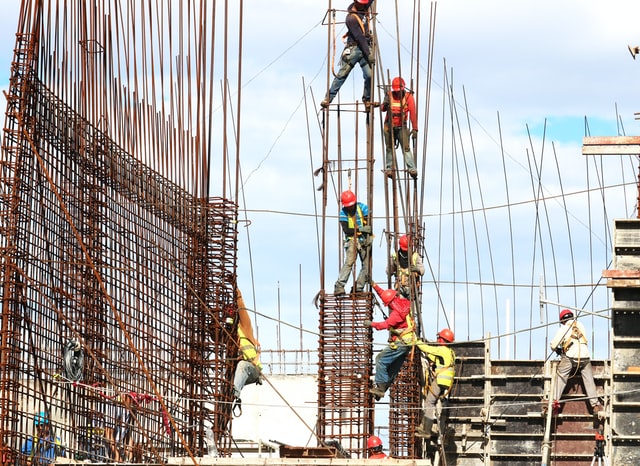
Humans are known to be very innovative and prolific builders in nature. With new advancements and technologies every day, a new construction trend will undoubtedly arise. The construction industry is vast, and it is known to account for about 13 trillion dollars in the global economy by 2022.
This decade has been a series of a blur, with the world dealing with a worldwide pandemic to series of unwanted climate changes. The actual question is, how will the construction business adapt to these circumstances, and will this arise in a new construction trend to help keep the safety of the occupants and the sustainability of an establishment? Let’s take a closer look at the list of recent construction trends in 2022 and find out.
1. 3D Printing
In recent times, 3D printing has been an enormous contribution to the construction industry, from creating architectural models to actual walls, floors, and other necessities needed in construction. Now, 3D printing is for practical use like low-income and emergency houses. The current value of an entirely 3D-printed home is around 10,000 dollars, and there’s a possibility that manufacturers will reduce the price even further up to 4,000 dollars. 3D Printing in construction industry provides benefits such as less waste production and the easy mass printing of custom designs without changing any machinery.
2. Environmentally-Friendly Construction
In 2018, The global efficient building design market made about $23.61 billion. At the same time, the worldwide efficient building envelope industry had an income of about 28.96 billion dollars within the same year. The energy-efficient movement has grown out over the years, and people are adapting to more environmentally-friendly alternatives for construction.
In fact, in 2019, there were 69,066 total registrations for Leadership in Energy and Environmental Design, with commercial buildings being the most significant percentage of the registrations. With this, it is safe to say that greener construction will surely continue for 2022, and new advancements for a more energy-efficient one are yet to come.
3. Modular Construction
Modular construction is more efficient than traditional on-site construction since the building is completed faster, for about 20% to 50%. It can also save you some construction costs for up to 20%. In addition, 65% of building professionals reduced the costs of a project with modular materials, while 40% of them announced doing so by 6% or more. And since the construction is outside the area, the waste is lesser, and you can recycle the remaining materials. By going modular, this construction process will halve the construction and demolition waste due to the optimized fabrication.
4. Development of New Construction Materials
When it comes to commercial construction, here are a few things that an entrepreneur must incorporate to achieve a more sustainable and cost-efficient establishment. They can also help reduce building material costs and source cost-effective, sustainable materials. They led to new building materials, which are currently trending in construction use.
- Engineered Cementitious Composite (ECC)– This is also known as “bendable concrete.” This material contains tiny, polymer-derived fibers that make it much more durable and crack-resistant than traditional concrete, which results in the ECC utilizing lesser cement and having a smaller carbon footprint.
- Engineered Timber– This material is manufactured by bonding several types of softwood. This lumber is strong enough to replace steel or even concrete. With this material, you can have fewer emissions and less waste than steel and concrete.
- Recycled Materials– The practice of using recycled materials has been developing for the past few years, but it doesn’t mean that it will end soon. Building structures now utilize recycled materials entirely.
5. Autonomous Machines
Many construction companies are already adapting to fully autonomous machines on construction sites. These high-tech machines provide more efficiency, reduced emissions, and the enhanced comfort and safety for the operators. Companies working on construction equipment are having more success. The world may certainly see construction machines on sites for the following years to come.
6. Use of Renewable Biofuels
Diesel is slowly phasing out of the construction machines. People are slowly turning towards renewable biofuels for power. This trend is most common now in California, as the state subsidizes the move. This advancement can help reduce the building’s carbon footprint and promote a more environmentally friendly construction.
8. Drones For Better Visibility
The construction industry now utilizes drones for more visibility in surveying and inspection. With this, professionals can spot issues and mishaps from above and more efficiently. Drones with downward-facing sensors, such as RGB, multispectral and thermal, can swiftly capture aerial data in a short amount of time.
9. Artificial Intelligence
Artificial Intelligence is rampant nowadays from our mobile devices, personal computers, and even coffee machines, so it is not surprising that professionals will soon utilize it for construction purposes. In theory, it will become more popular in the following years due to reducing construction costs. AI can also develop forecast models, allowing project managers and team members to ascertain whether their time frame is applicable. Furthermore, experts also test AI as a powerful tool to minimize construction site-related injuries and deaths, which adds to the business and human costs of the industry.
These innovations are very efficient, and it’s only the tip of the iceberg. There is still more to discover and anticipate. For more blogs about the current trends in construction, be sure to visit Best Access Doors, where you can find general-purpose heavy-duty access panels for your next commercial building project. You can contact us at 1-800-483-0823 for more details about our products.
 Best Access Doors - Blog