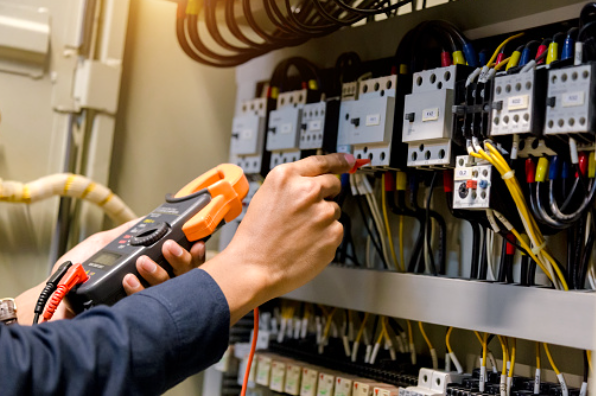
Every building has different electrical requirements. It all depends on the size of the structure or the energy consumed by the equipment essential for operation. In a commercial property where practically everything runs using electricity, it is critical to have the wirings and installation correctly installed.
When it pertains to cabling, wiring, and busways, electrical designers and engineers have several approaches to supplying loads inside a building. Local regulatory restrictions, including electrical room safety requirements, project cost, new construction versus remodel, owner choice or specifications, structure height and type, and long-term goals for the facility can all influence the decision to define one approach over another or a combination of ways.
There are three basic types of electrical wiring techniques for commercial buildings. Each has its pros and cons that you might want to consider:
1. Raceways & Conductors
The NFPA 70: National Electrical Code, notably Chapter 3, regulates commercial wiring, just as residential wiring. The article titled General Requirements for Wiring Methods and Materials, under the NEC Article 300, handles all wiring installation except for any adjustments made by other items in Chapter 3. The criteria are safeguarding against physical damage, fastening and stabilizing the structure, sufficient cover for subsurface installations, and many other features.
Among the most prevalent electrical wiring methods are the raceway and conductor system. It involves many insulated phases in metallic or nonmetallic conduits or tubes. According to the NEC standards and the application procedure, it may include an equipment ground conductor. Every installation has a custom design that fits the specs and architectural plans of the site.
PVC refers to rigid polyvinyl chloride conduit, which comes in various shapes and sizes, but is most commonly utilized as Schedule 40 or 80 for subterranean applications that are either directly sunk or concrete wrapped.
RMC: is a galvanized steel conduit with a thick wall and zinc external coating utilized in situations that necessitate optimum protection against physical damage. You may also know it as RGS or GRC.
EMT: The most popular raceway in commercial structures is EMT, a threadless steel tube with thin walls galvanized on the outside and corrosion-resistant on the inside.
IMC: Intermediate metal conduit (IMC) is a thin-walled variation of the RMC with a corrosion-resistant internal coating and a galvanized exterior.
FMC: Flexible metal conduit (FMC) is a metal conduit in various metal types and wall thicknesses.
Cable trays are not the same as raceways. The latter is a structural system for managing and mechanically supporting cables.
Pros
- It allows for some adjustments in circuit layout.
- In cases where there is a potential for physical damage, you can use IMC, RMC, and EMT.
- Raceways are a versatile material that you may utilize in various remodeling projects.
- When you remove the conductors from the installation, you can remove the raceways.
- Underground PVC installations are low-cost.
Cons
- The cost of installation is usually relatively high.
- It only allows for a certain amount of bends before needing a junction box.
- Because of the more stringent routing requirements, installation can be more challenging than cabling systems.
- In terms of applications, type PVC has a few drawbacks.
- You cannot place some varieties in places where they’ll sustain physical damage.
Busways
Another variety of electrical wiring utilized in commercial applications is busways, also known as bus ducts. Its description is a metal-enclosed racetrack with factory-mounted bus bars. Typically, there are two busways types: feeder and plug-in—insulated or bare conductors, which you can utilize in these combinations.
Pros
- Significant ampere ratings are available, ranging from 60 to 4,000 amps.
- Compared to several conduits for the same load, it is smaller.
- With plug-in busways, you may add and adjust load takeoffs as needed.
- With bus duct uses, total voltage drop has a lower impact.
Cons
- When many elbows and offsets are necessary, installation costs can quickly escalate.
- You can’t utilize it in places where there’s a risk of physical harm.
- There is a space limit for bus plugs in vertical installations.
- If water leaks exist in the building, it may fail.
- On the bus duct, there are many short-circuit currents.
Cable Assemblies
Another frequent sort of electrical wiring is a premade cable assembly. The composition consists of insulated phase and neutral conductors and an insulated or bare equipment grounding conductor, and there is a wrapping of metallic or nonmetallic sheath around the latter.
Manufactured cable assemblies are available as conventional solutions, but you can also customize them with unique conductor configurations and consider installing drywall access door panel exposed flange for maintenance. In a standard setup, you can typically utilize THHN/THWN or XHHW-2 (copper or aluminum) conductors. The following are the most typical types seen in commercial structures:
#1. Armored cable (type AC) includes a metallic sheathing of steel or aluminum armor in the package, serving as a ground path. You typically utilize it to connect luminaires to power receptacles on branch circuits.
#2. Metal-clad cable (type MC): A series of conductors enclosed in a metallic sheath of steel or aluminum that interlocks armor, although not as a ground path in this instance. MC is offered an outer PVC jacket for direct burying or moist locations.
#3. Mineral-insulated, metal-sheathed cable (type MI): A unit of copper conductors encased in a magnesium oxide-insulated copper sheath. It gets utilized for specialized applications like ensuring that emergency systems comply with NEC 700 standards.
#4. Nonmetallic sheathed cable (types NM, NMC, NMS): It is a unit of conductors enclosed in a nonmetallic, PVC-insulated sheathing with a nylon jacket. You may know as Romex. The grounding conductor is usually bare copper.
#5. Service-entrance cable (types SE, USE): A series of conductors having a PVC jacket on the outside, enclosed in a nonmetallic sheathing with cable support. You can utilize it as a distribution feeder to a branch circuit panelboard and a utility drop to a meter pedestal.
#6. Underground feeder and branch-circuit cable (type UF): A group of conductors utilized for external direct burial feeders and branch circuits to unattached garages. It has a wrapping of a nonmetallic sheathing with PVC insulation and a nylon jacket inside a gray PVC outer jacket in this combination.
Pros
- The cost of installation is usually lower.
- It takes less time to install.
- There is no limit to how many bends you can do.
- Assemblies went to thorough testing at the manufacturer.
- Type MI is a fire-resistant material.
Cons
- It needs shorter spacing for support and security.
- There are no modifications after the installation.
- You cannot place it in areas where there is a risk of physical damage.
- You cannot abandon it during the construction of a building.
- During the acquisition of cabling, you require more planning.
The Takeaway
Such wiring techniques are only a few of the many options available on the market. Although these are the wiring techniques you will most often find on a commercial project. Other conditions may necessitate the use of a different wiring style. Always double-check the fine print of service for each wiring type application and consult an expert if you’re in doubt.
Best Access Doors is your best option for your access doors and panels. We offer an excellent selection of products that will surely fit your project needs, all categorized for your shopping convenience. For quotation requests and customized door sizes, call (800) 483-0823 today!
 Best Access Doors - Blog