A great commercial building properly balances aesthetic appeal and commercial viability. While innovative structures and the latest designs are necessary for the aesthetic, a functional establishment must include detailed services and a well-planned layout for the occupants while maintaining energy efficiency.
A commercial building can achieve energy efficiency and reduced energy bills through proper insulation. It improves the overall performance, reduces harmful greenhouse gas emissions, and helps keep your energy bills down. In addition, it can also deliver higher resilience to extreme weather, provide better comfort, and reduce stress on the electricity grid.
Enhancing your commercial building’s insulation can be as simple as sealing open holes and leaks, installing gasketed access doors and panels, to more complex materials that enhance the totality of your establishment. If you want to know the different insulation types used in commercial construction, then keep on reading;
- Blanket (Batts and Rolls)
Blanket insulation, commonly used in commercial buildings, comes in two forms, either batts or rolls. Blanket insulation consists of flexible fibers, commonly known as fiberglass. Aside from that, it can also be manufactured from minerals, wool, plastic fibers, and natural fibers, such as sheep’s wool and cotton.
Batts and rolls are available in different sizes suited to standard spacing of wall studs, rafters or attic trusses, and floor joists. You can cut continuous rolls to fit any structure you want to insulate. Manufacturers often include a facing (kraft paper, foil-kraft paper, or vinyl) to act as air barriers and vapor. A facing also helps assist with fastening and handling during installation.
2. Concrete Block Insulation
Concrete blocks are the main foundation used to build walls, and there are many ways to insulate them. If the central area is not filled with steel and concrete for structural reasons, you can fill it with insulation, which increases the average wall R-value.
It is essential to install insulation over the surface of the blocks, either on the exterior or interior of the foundation walls. Placing insulation on the cover has the added benefit of containing the thermal mass of the blocks within the available space, which can regulate indoor temperatures. Some manufacturers include polystyrene beads into concrete blocks, while others create concrete blocks that house rigid foam inserts.
3. Rigid Foam
Rigid foams are perfect for insulating almost any area of your home. They are beneficial in exterior wall sheathing, interior sheathing for basement walls, and other special applications. This insulation provides excellent thermal resistance (about two times greater than other insulating materials with equal thickness) and reduces heat conduction through structural elements, like steel studs and wood. The most common materials used in making foam boards include polystyrene, polyurethane, and polyisocyanurate.
4. Insulating Concrete Forms
Insulating concrete forms are a mixture poured into concrete walls, which will, later on, be a part of the wall assembly. This process creates barriers with high heat resistance. Even though ICF homes use concrete, they look like any traditional homes. ICF contains interconnected foam boards and hollow-core foam insulation blocks. The foam boards are joined together using plastic ties. Aside from foam boards, you can also add steel rods for extra reinforcement before pouring the concrete. Steel rods are placed inside the cores to reinforce the walls when utilizing foam blocks.
5. Loose-Fill and Blown-In
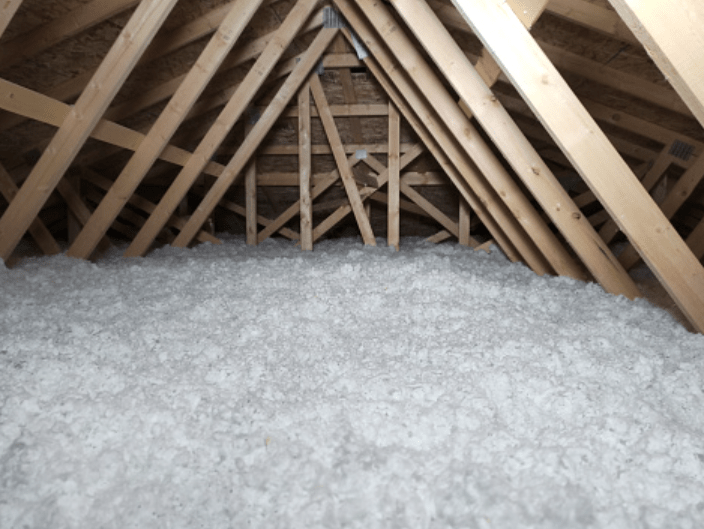
Loose-fill insulation comprises small particles of foam, fiber, or other materials. These tiny particles form an insulation material that can fit any space without disarranging the structures. This ability to adapt makes loose-fill insulation suitable for retrofits and locations where it would be tricky to install other types of insulation.
6. Reflective System
This insulation is unique among other materials because it does not need to fill in a particular structure in a building—radiant barriers and reflective insulation function by reflecting radiant heat away from your establishment or home. Radiant barriers are more effective in hot climatic areas, primarily when the cooling air ducts are located in the attic. Studies show that this insulation system can decrease cooling costs up to 5% to 10% when used in sunny climates. The minimized heat gain may even allow for a minor air conditioning system.
Every entrepreneur aspires to an energy-efficient establishment. Aside from its beneficial effects on the environment, it also helps enhance indoor comfort and reduce energy bills. There are still other insulation materials available. Insulation systems may vary depending on their material cost, labor, application, and capacity. Ensure you collaborate with your contractor on what type of insulation will suit your commercial building best.
If you enjoy reading blogs about commercial construction, you can always visit our website at Best Access Doors! We also provide high-quality products like access doors for any of your project needs. If you ever require any help on your purchase journey, you can contact us directly at (800) 483-0823 for more details!
 Best Access Doors - Blog